





UNESCO Heritage of India: Cultural Sites, Natural Wonders and Living Traditions
A complete guide to India's UNESCO World Heritage Sites and Intangible Cultural Heritage, covering monuments, wildlife, dance, music, festivals and traditional arts.
UNESCO Heritage of India: Cultural Sites, Natural Wonders and Living Traditions
Subtitle: Explore India's UNESCO World Heritage Sites and Intangible Cultural Heritage through a structured, region-wise guide to monuments, wildlife, dance, music, festivals and traditional knowledge.
Introduction
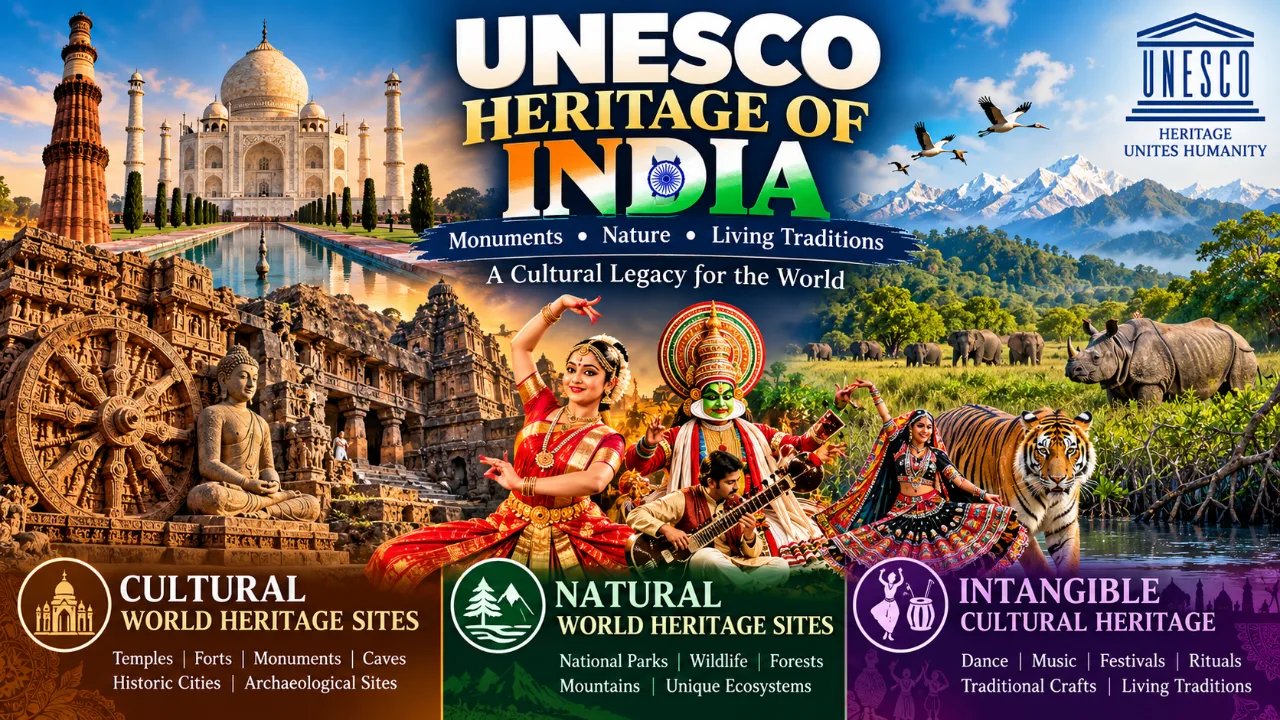
India's heritage reflects thousands of years of artistic achievement, scientific knowledge, religious traditions, architecture, biodiversity and community life. UNESCO recognizes heritage through different programmes, including the World Heritage List and the Intangible Cultural Heritage Lists.
For effective general knowledge preparation, it is important to understand three categories:
Cultural World Heritage Sites — monuments, archaeological sites, historic cities and cultural landscapes.
Natural World Heritage Sites — forests, wildlife habitats, mountains and other places of outstanding natural importance.
Intangible Cultural Heritage — living traditions such as dance, music, festivals, rituals, craftsmanship and traditional knowledge.
Important update: According to UNESCO's official country listing, India has 45 World Heritage properties as of October 2026: 37 cultural, 7 natural and 1 mixed. The Ancient Buddhist Site of Sarnath was added in 2026.
Part 1: Cultural World Heritage Sites of India
Cultural World Heritage Sites demonstrate India's architectural excellence, religious traditions, urban planning, artistic achievements and historical development.
A. Ancient Civilisation, Buddhist Heritage and Rock-Cut Architecture
Heritage Site | State/Region | Key Facts |
|---|---|---|
Ajanta Caves | Maharashtra | Buddhist murals, paintings and rock-cut architecture |
Ellora Caves | Maharashtra | Buddhist, Hindu and Jain monuments |
Elephanta Caves | Maharashtra | Rock-cut Hindu sculptures, particularly associated with Shiva |
Buddhist Monuments at Sanchi | Madhya Pradesh | Stupas, gateways and Buddhist art |
Rock Shelters of Bhimbetka | Madhya Pradesh | Prehistoric rock art and evidence of early human life |
Mahabodhi Temple Complex at Bodh Gaya | Bihar | Associated with the Buddha's enlightenment |
Archaeological Site of Nalanda Mahavihara | Bihar | Remains of an important ancient Buddhist educational centre |
Ancient Buddhist Site of Sarnath | Uttar Pradesh | Important Buddhist archaeological and religious site |
B. Temples, Sculpture and Indian Architecture
Heritage Site | State/Region | Key Facts |
|---|---|---|
Sun Temple, Konark | Odisha | Monumental temple designed as the chariot of the Sun God |
Group of Monuments at Mahabalipuram | Tamil Nadu | Pallava-era rock-cut monuments and temples |
Great Living Chola Temples | Tamil Nadu | Chola temple architecture and sculpture |
Khajuraho Group of Monuments | Madhya Pradesh | Temple architecture and elaborate sculptural decoration |
Group of Monuments at Pattadakal | Karnataka | Combination of northern and southern temple architectural traditions |
Group of Monuments at Hampi | Karnataka | Historic capital of the Vijayanagara Empire |
Sacred Ensembles of the Hoysalas | Karnataka | Intricate temple architecture and sculptural work |
Kakatiya Rudreshwara (Ramappa) Temple | Telangana | Medieval temple architecture and craftsmanship |
Rani-ki-Vav | Gujarat | Elaborately decorated stepwell |
Champaner-Pavagadh Archaeological Park | Gujarat | Archaeological remains, fortifications and religious buildings |
C. Forts, Historic Cities and Medieval Architecture
Heritage Site | State/Region | Key Facts |
|---|---|---|
Agra Fort | Uttar Pradesh | Major Mughal imperial fort |
Taj Mahal | Uttar Pradesh | Mughal mausoleum commissioned by Shah Jahan |
Fatehpur Sikri | Uttar Pradesh | Mughal imperial city associated with Akbar |
Red Fort Complex | Delhi | Important Mughal palace-fort complex |
Humayun's Tomb | Delhi | Landmark of Mughal garden-tomb architecture |
Qutb Minar and its Monuments | Delhi | Major complex associated with the Delhi Sultanate |
Hill Forts of Rajasthan | Rajasthan | Fortifications reflecting Rajput military and political history |
Historic City of Ahmadabad | Gujarat | Historic urban architecture and cultural traditions |
Jaipur City | Rajasthan | Historic planned city known for its urban design |
Moidams – the Mound-Burial System of the Ahom Dynasty | Assam | Ahom royal burial landscape |
Maratha Military Landscapes of India | Multiple locations | Fortifications associated with Maratha military history |
Dholavira: a Harappan City | Gujarat | Urban planning and water management of the Harappan civilisation |
D. Other Important Cultural Heritage Sites
Heritage Site | State/Region | Key Facts |
|---|---|---|
Agra Fort | Uttar Pradesh | Mughal imperial architecture |
Churches and Convents of Goa | Goa | Historic Christian religious architecture |
Chhatrapati Shivaji Terminus | Maharashtra | Victorian Gothic railway architecture |
Mountain Railways of India | Multiple states | Historic mountain railway engineering |
Victorian Gothic and Art Deco Ensembles of Mumbai | Maharashtra | Architectural development of Mumbai |
The Architectural Work of Le Corbusier | Chandigarh and international locations | Modernist architecture and urban design |
The Jantar Mantar, Jaipur | Rajasthan | Historic astronomical instruments |
Santiniketan | West Bengal | Rabindranath Tagore's educational and cultural vision |
Note: The tables above are a selected study list, not a complete reproduction of all 37 cultural properties. For the complete official list, use UNESCO's India country page.
Cultural Sites: Facts to Remember
Ajanta: Buddhist paintings and cave architecture.
Ellora: Buddhist, Hindu and Jain traditions in one monumental complex.
Sanchi: Buddhist stupas and gateways.
Konark: Sun Temple and chariot symbolism.
Mahabalipuram: Pallava art and architecture.
Hampi: Vijayanagara Empire.
Dholavira: Harappan urban planning and water management.
Sarnath: Important site in the history of Buddhism.
Santiniketan: Associated with Rabindranath Tagore.
Moidams: Ahom royal burial tradition.
Maratha Military Landscapes: Fortification and military heritage.
Part 2: Natural World Heritage Sites of India
Natural World Heritage Sites are recognised for their outstanding natural value, biodiversity, ecological processes or geological significance.
India has seven natural World Heritage properties and one mixed property, which combines cultural and natural significance.
A. Natural World Heritage Sites
Site | State/Region | Important Features |
|---|---|---|
Kaziranga National Park | Assam | Famous for the Indian one-horned rhinoceros |
Manas Wildlife Sanctuary | Assam | Biodiversity, wildlife habitats and landscape conservation |
Keoladeo National Park | Rajasthan | Important wetland and bird habitat |
Sundarbans National Park | West Bengal | Mangrove ecosystem and tiger habitat |
Great Himalayan National Park Conservation Area | Himachal Pradesh | Himalayan ecosystems and biodiversity |
Nanda Devi and Valley of Flowers National Parks | Uttarakhand | Mountain ecosystems and alpine flora |
Western Ghats | Multiple states | Biodiversity hotspot and endemic species |
B. Mixed World Heritage Site
Site | State/Region | Important Features |
|---|---|---|
Khangchendzonga National Park | Sikkim | Combines exceptional natural landscapes with cultural and spiritual significance |
Natural Heritage: Important Facts
Kaziranga: One-horned rhinoceros.
Manas: Wildlife conservation in Assam.
Keoladeo: Wetland and migratory birds.
Sundarbans: Mangroves and tiger habitat.
Valley of Flowers: Alpine flowers and Himalayan biodiversity.
Western Ghats: High biodiversity and many endemic species.
Khangchendzonga National Park: India's mixed World Heritage property.
Exam distinction: A national park or wildlife sanctuary is not automatically a UNESCO World Heritage Site. UNESCO inscription is a separate international designation.
Part 3: UNESCO Intangible Cultural Heritage of India
Intangible Cultural Heritage refers to living traditions, skills, expressions, rituals and knowledge that communities recognise as part of their cultural heritage. These traditions are transmitted across generations and may evolve over time.
UNESCO's official India listing records 16 elements on its Intangible Cultural Heritage lists. The examples below include important traditions useful for cultural studies and general knowledge.
A. Dance and Performing Arts
Tradition | State/Region | Important Features |
|---|---|---|
Chhau Dance | Eastern India | Martial movements, masks in some styles, mythology and dance-drama |
Kalbelia Folk Songs and Dances | Rajasthan | Community music and dance traditions |
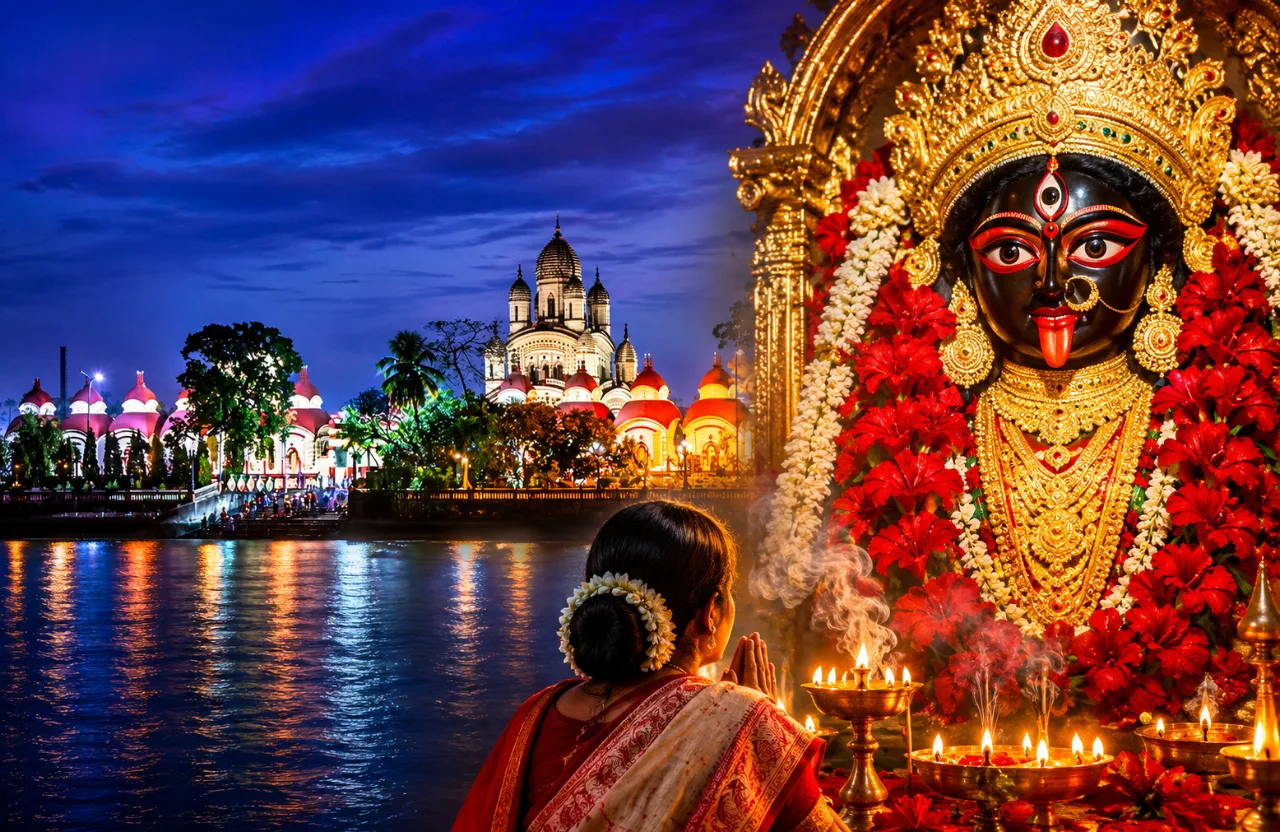
Mudiyettu | Kerala | Ritual theatre and dance-drama associated with the worship of Kali |
Sankirtana | Manipur | Ritual singing, drumming and dancing |
Garba of Gujarat | Gujarat | Community dance performed especially during Navratri |
Ramlila | Multiple regions | Traditional dramatic performance of the Ramayana |
Kutiyattam | Kerala | Classical Sanskrit theatre tradition |
B. Festivals and Community Traditions
Tradition | Region | Important Features |
|---|---|---|
Durga Puja in Kolkata | West Bengal | Community worship, artistic pandals and public celebrations |
Kumbh Mela | Multiple locations | Major religious gathering and pilgrimage tradition |
Deepavali | Across India | Festival traditions associated with light and regional religious narratives |
Nowruz | Celebrated by communities in India and other countries | New Year tradition shared across several cultures |
Yoga | Originating in India | Physical, mental and spiritual practices |
Ramman | Garhwal Himalayas, Uttarakhand | Religious festival and ritual theatre |
C. Traditional Craftsmanship and Knowledge
Tradition | State/Region | Important Features |
|---|---|---|
Traditional Brass and Copper Craft of the Thatheras of Jandiala Guru | Punjab | Traditional metalworking and utensil-making skills |
Buddhist Chanting of Ladakh | Ladakh | Recitation of sacred Buddhist texts |
Traditional Ladakh Buddhist chanting | Himalayan region | Oral transmission of religious texts and ritual performance |
Other Important Traditions to Study
The following Indian traditions are also valuable topics for cultural preparation, although not every one is a separate UNESCO inscription:
Baul music of Bengal.
Bihu traditions of Assam.
Bharatanatyam, Kathak, Kathakali and Odissi.
Hindustani and Carnatic classical music.
Traditional puppetry and shadow theatre.
Madhubani, Warli and Pattachitra painting.
Handloom weaving, embroidery and regional textile traditions.
Traditional knowledge of medicinal plants and community-based conservation.
Important distinction: A tradition may be nationally important without being inscribed on UNESCO's Intangible Cultural Heritage list. Always distinguish between an art form's cultural significance and its formal UNESCO status.
Quick Revision: UNESCO Heritage of India
Category | What to Remember |
|---|---|
Cultural World Heritage | Monuments, archaeological sites, historic cities and cultural landscapes |
Natural World Heritage | Wildlife, forests, wetlands, mountains and biodiversity |
Mixed World Heritage | Sites with both cultural and natural significance |
Intangible Cultural Heritage | Dance, music, festivals, rituals, crafts and traditional knowledge |
Tentative List | Sites proposed for possible future World Heritage nomination; not yet equivalent to inscription |
Conclusion
India's UNESCO heritage demonstrates the relationship between civilisation, artistic expression, ecological diversity and living community traditions. Cultural monuments preserve architectural and historical achievements, natural sites protect exceptional ecosystems, and intangible heritage sustains skills and practices passed from one generation to the next.
For effective revision, remember each site's name, location, category, defining feature and UNESCO recognition status. Check the official UNESCO lists before publication or examination preparation, because new inscriptions and updates can change the latest totals.
Official Editorial PDF Edition
Verified PublicationDownload a clean, high-resolution printable copy complete with tables, formulas, and high-res photography. Free for registered readers.
Community Feedback & Editorial Ratings
All Reader Reviews (0)
No reader reviews yet for this story.
Be the first to share your rating and perspective!