










Nobel Prize in Economics 2026: Robert E. Hall and Michael Woodford Win for Research on Economic Stability
The two American economists are honoured for their research on the microeconomic foundations of macroeconomic stabilisation, helping governments and central banks better manage inflation and economic shocks.
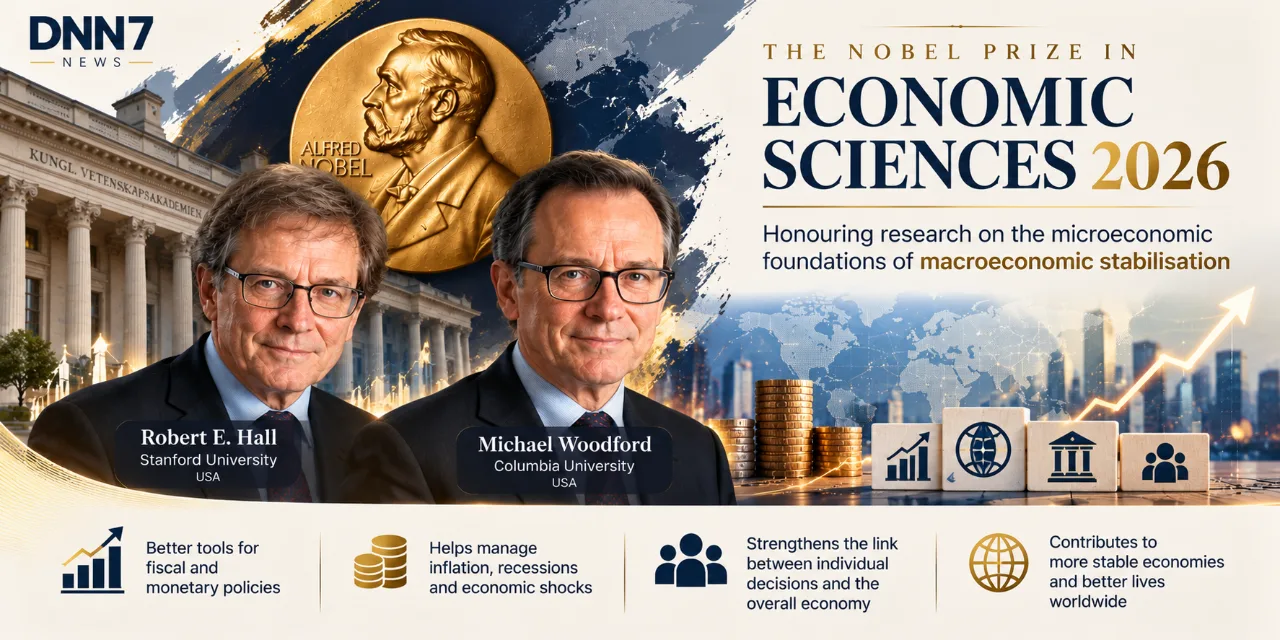
Nobel Prize in Economics 2026: Robert E. Hall and Michael Woodford Honoured for Research on Economic Stability
The two American economists developed influential macroeconomic models that help governments and central banks design policies to reduce economic fluctuations.
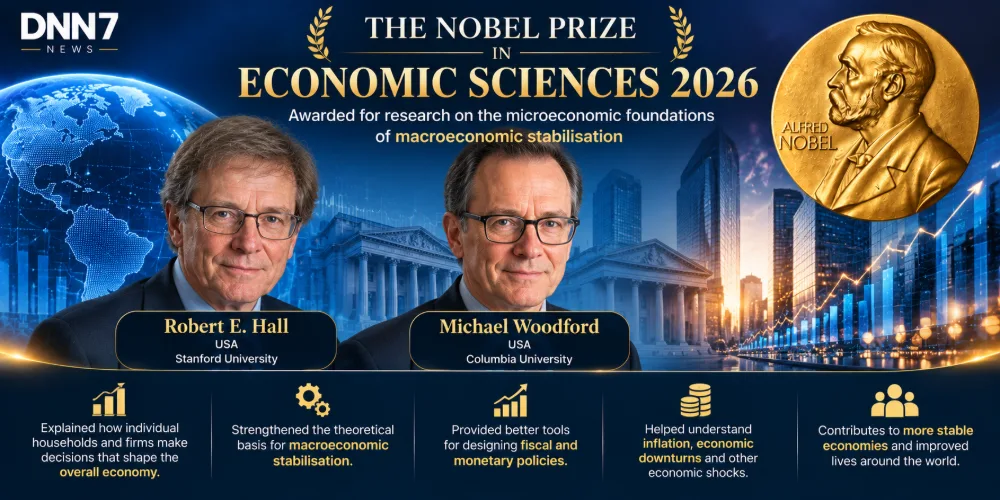
Short Summary: Robert E. Hall and Michael Woodford have been awarded the 2026 Nobel Prize in Economic Sciences for their research on the microeconomic foundations of macroeconomic stabilisation. Their work has strengthened the theoretical basis for policies used to manage inflation, economic downturns and other economic shocks.
Introduction
American economists Robert E. Hall and Michael Woodford have been awarded the 2026 Sveriges Riksbank Prize in Economic Sciences in Memory of Alfred Nobel for their pioneering contributions to economic theory and policy. The Royal Swedish Academy of Sciences recognised their research on the microeconomic foundations of macroeconomic stabilisation, which has improved economists’ understanding of how governments and central banks can reduce fluctuations in economic activity.
Their work provides a stronger theoretical foundation for designing economic policies that can help limit severe downturns and manage periods of rapid economic expansion.
Who Are the Nobel Economics Laureates?
Robert E. Hall
Robert E. Hall is an economist affiliated with Stanford University in California, United States. His research has made important contributions to the understanding of consumer behaviour, consumption patterns and the wider functioning of the economy.
One of the central questions in economics is how households decide how much to spend and save. These decisions influence demand for goods and services, business activity and overall economic performance. Hall’s work has helped economists understand the relationship between individual economic decisions and broader changes in the economy.
Michael Woodford
Michael Woodford is an economist affiliated with Columbia University in New York, United States. He is widely known for his contributions to monetary economics and the theoretical understanding of how central banks influence economic activity.
His research highlights the importance of expectations in economic decision-making. Households and businesses do not respond only to current interest rates or prices; they also consider what they expect to happen in the future. These expectations can influence spending, investment, prices and employment.
Woodford’s work has played an influential role in modern discussions of monetary policy and central-bank communication.
Why Did They Win the Nobel Prize in Economics 2026?
The prize recognises research into the microeconomic foundations of macroeconomic stabilisation.
Macroeconomics studies the economy as a whole, including inflation, unemployment, economic growth and recessions. Microeconomics examines the decisions made by individual households and businesses.
Understanding how these smaller decisions combine to shape the wider economy is essential for developing reliable economic models. Hall and Woodford’s work has helped strengthen this connection, giving policymakers better theoretical tools to understand economic fluctuations and assess the likely effects of policy decisions.
The research is particularly relevant when economies experience major disruptions, such as sudden changes in energy prices, falling consumer demand or periods of high inflation.
How Can Their Research Help Governments and Central Banks?
Governments and central banks use fiscal and monetary policies to influence economic activity.
Fiscal policy involves government spending and taxation. Monetary policy includes decisions concerning interest rates and other measures used by central banks to influence borrowing, spending and inflation.
When an economy weakens, policymakers may consider measures to support demand and employment. When inflation rises sharply, they may take steps to moderate demand and bring price increases under control.
Economic models based on sound theoretical foundations help policymakers evaluate the possible consequences of these decisions. Hall and Woodford’s contributions have improved the framework economists use to analyse these challenges and understand how policy decisions affect households, businesses and the wider economy.
However, no economic model can eliminate uncertainty or guarantee that every policy decision will succeed. Real-world outcomes also depend on unexpected events, financial conditions and the responses of people and businesses.
Why Is Economic Stability Important?
Economic stability affects everyday life. High inflation can reduce the purchasing power of household incomes, while a recession can lead to falling business revenues, reduced investment and job losses.
More effective stabilisation policies can help governments and central banks respond to such challenges. By improving the understanding of economic behaviour and policy effects, economic research can contribute to better-informed decisions during periods of uncertainty.
The work recognised this year demonstrates the importance of connecting economic theory with the practical challenges faced by policymakers.
About the Economics Nobel Prize
The award’s official name is the Sveriges Riksbank Prize in Economic Sciences in Memory of Alfred Nobel. It was established in 1968 by Sweden’s central bank, Sveriges Riksbank, and was first awarded in 1969.
Although commonly called the Nobel Prize in Economics, it is technically a separate prize associated with the Nobel awards. The laureates are selected by the Royal Swedish Academy of Sciences.
The 2026 Economics Prize recognises Robert E. Hall and Michael Woodford for research that has strengthened the foundations of modern economic analysis. Their contributions have helped improve the theoretical tools available to governments and central banks as they work to manage inflation, respond to economic shocks and support stability.
Their recognition highlights the continuing importance of economic research in understanding how individual decisions shape national and global economies—and how carefully designed policies can help societies navigate periods of economic uncertainty.
Official Editorial PDF Edition
Verified PublicationDownload a clean, high-resolution printable copy complete with tables, formulas, and high-res photography. Free for registered readers.
Community Feedback & Editorial Ratings
All Reader Reviews (0)
No reader reviews yet for this story.
Be the first to share your rating and perspective!