










K. Annamalai Explains the Historical Link Between the Bengal Famine and American Independence
The Great Bengal Famine of 1770, the East India Company's financial crisis and the 1773 Tea Act offer a fascinating perspective on the history of British colonialism.
K. Annamalai Explains the Historical Connection Between the Bengal Famine and American Independence
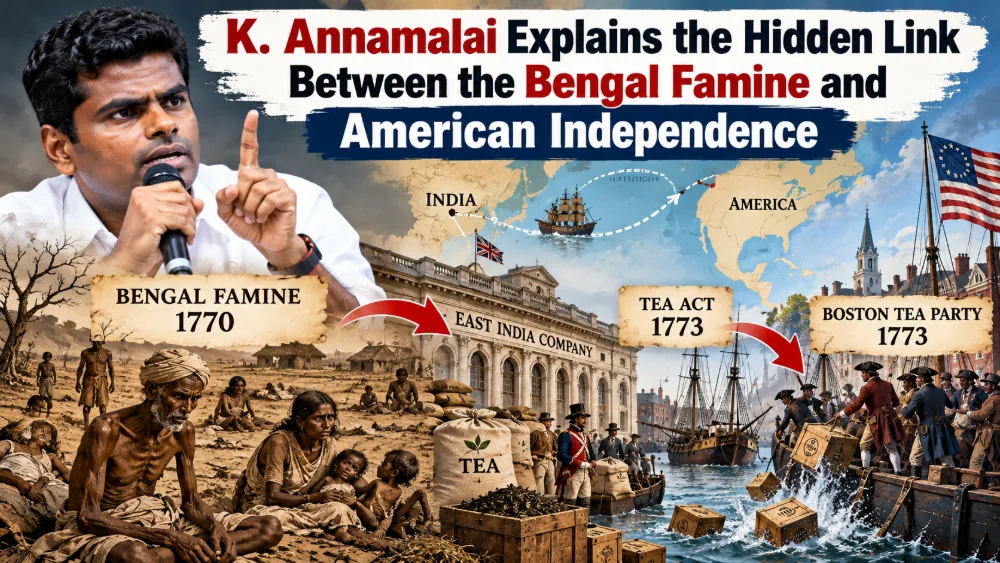
CHENNAI: A video featuring Tamil Nadu BJP leader K. Annamalai has attracted attention on social media for highlighting a lesser-known historical connection between the devastating Bengal Famine of 1770 and the events that contributed to American independence.
The video, shared on Facebook by Krishna Kumar Murugan, discusses how the policies of the British East India Company in Bengal and the company's later financial difficulties may be connected to the growing resistance against British rule in the American colonies.
The historical connection raises an intriguing question: could the suffering caused by British colonial policies in India have influenced the political tensions that eventually led to the American Revolution?
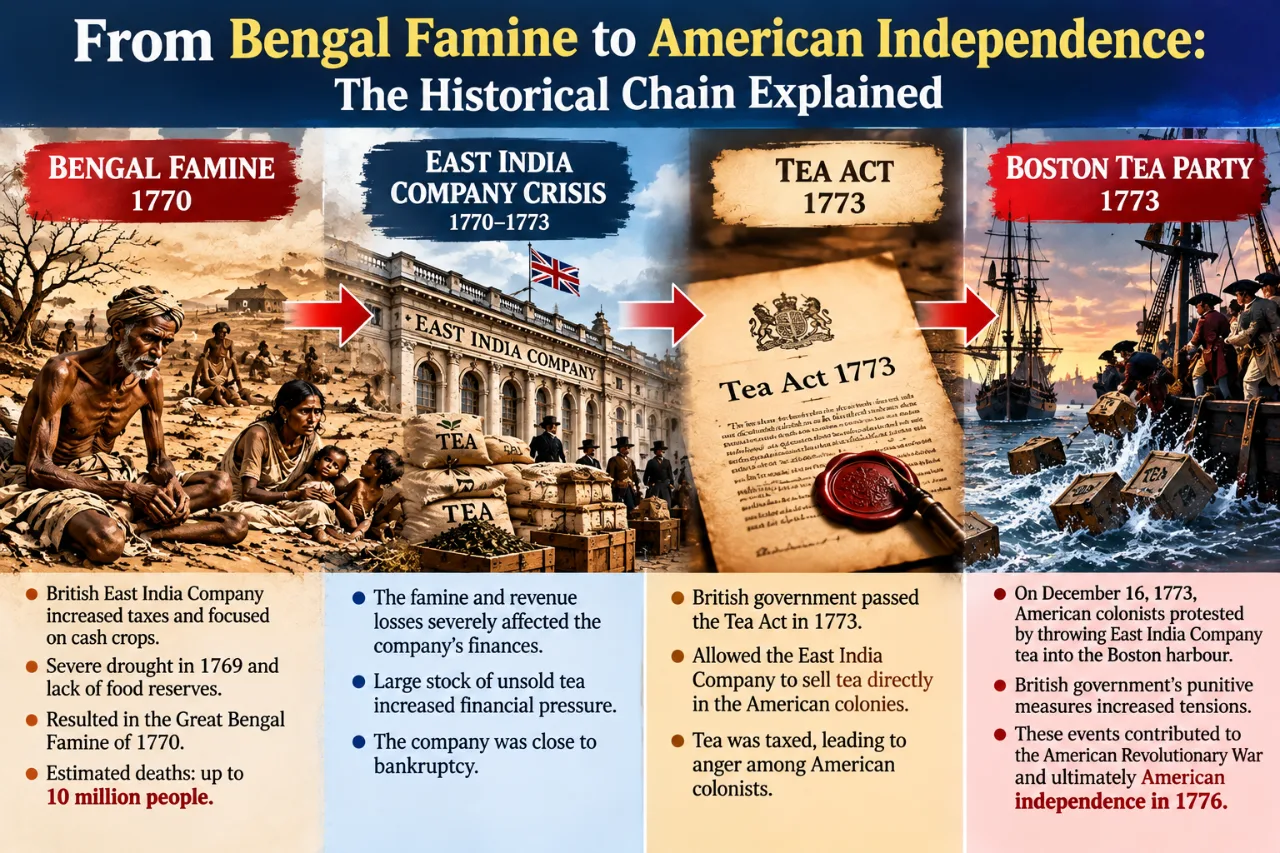
The Great Bengal Famine of 1770
The Great Bengal Famine of 1770 was one of the most devastating humanitarian disasters in the history of colonial India. It affected Bengal and neighbouring regions during a period marked by severe crop failures, drought and the East India Company's expanding control over revenue collection.
The company had acquired the right to collect revenue in Bengal, Bihar and Orissa in 1765. Its revenue policies, combined with the agricultural crisis and failures in famine relief, contributed to the suffering of the population.
Historical estimates of the death toll vary considerably, with some accounts suggesting that millions of people died. The famine also exposed the consequences of colonial administration and the company's emphasis on revenue and commercial interests during a humanitarian catastrophe.
How Was the Bengal Famine Connected to the Tea Act?
The East India Company faced serious financial difficulties in the years following the famine. By 1773, the company was also struggling with large stocks of unsold tea and financial pressures.
The British Parliament passed the Tea Act in 1773 to support the company by allowing it to sell tea directly in the American colonies under favourable trading arrangements.
However, the measure angered many American colonists. They objected to the company's privileged position and the continuation of the tax on tea, which they viewed as an example of taxation without representation.
On December 16, 1773, protesters in Boston boarded ships and threw large quantities of East India Company tea into the harbour. The incident became known as the Boston Tea Party.
The British government's subsequent punitive measures intensified tensions between Britain and its North American colonies, contributing to the wider conflict that led to the American Revolutionary War and, ultimately, the Declaration of Independence in 1776.
Did the Bengal Famine Lead to American Independence?
The connection is more complex than a direct cause-and-effect relationship. The Bengal Famine and the East India Company's financial difficulties form part of the broader history of British imperial trade and governance. However, the American Revolution had several causes, including disputes over taxation, colonial representation, trade restrictions and political autonomy.
The Tea Act and the Boston Tea Party are well-documented events in the history of the American Revolution. The argument that the Bengal Famine indirectly influenced the movement for American independence offers an additional perspective on how events in different parts of the British Empire may have intersected.
Historians continue to examine these connections through archival records and contemporary accounts. The precise extent to which news of the famine influenced individual American colonists requires careful historical evidence.
Social Media Brings Colonial History Back Into Focus
K. Annamalai has renewed interest in the relationship between British colonial policies in India and the political developments that transformed North America.
The discussion also highlights the importance of examining world history beyond national boundaries. Economic decisions, colonial administration and public resistance in one region could form part of a much wider imperial story.
The historical debate serves as a reminder that events such as the Bengal Famine and the Boston Tea Party should be understood through documented evidence, while distinguishing established facts from interpretations of their broader connections.
Sources: The US Department of State's Office of the Historian, the UK National Archives and the Library of Congress provide historical accounts of the Tea Act, the Boston Tea Party and the events leading to the American Revolution.
Official Editorial PDF Edition
Verified PublicationDownload a clean, high-resolution printable copy complete with tables, formulas, and high-res photography. Free for registered readers.
Community Feedback & Editorial Ratings
All Reader Reviews (0)
No reader reviews yet for this story.
Be the first to share your rating and perspective!