
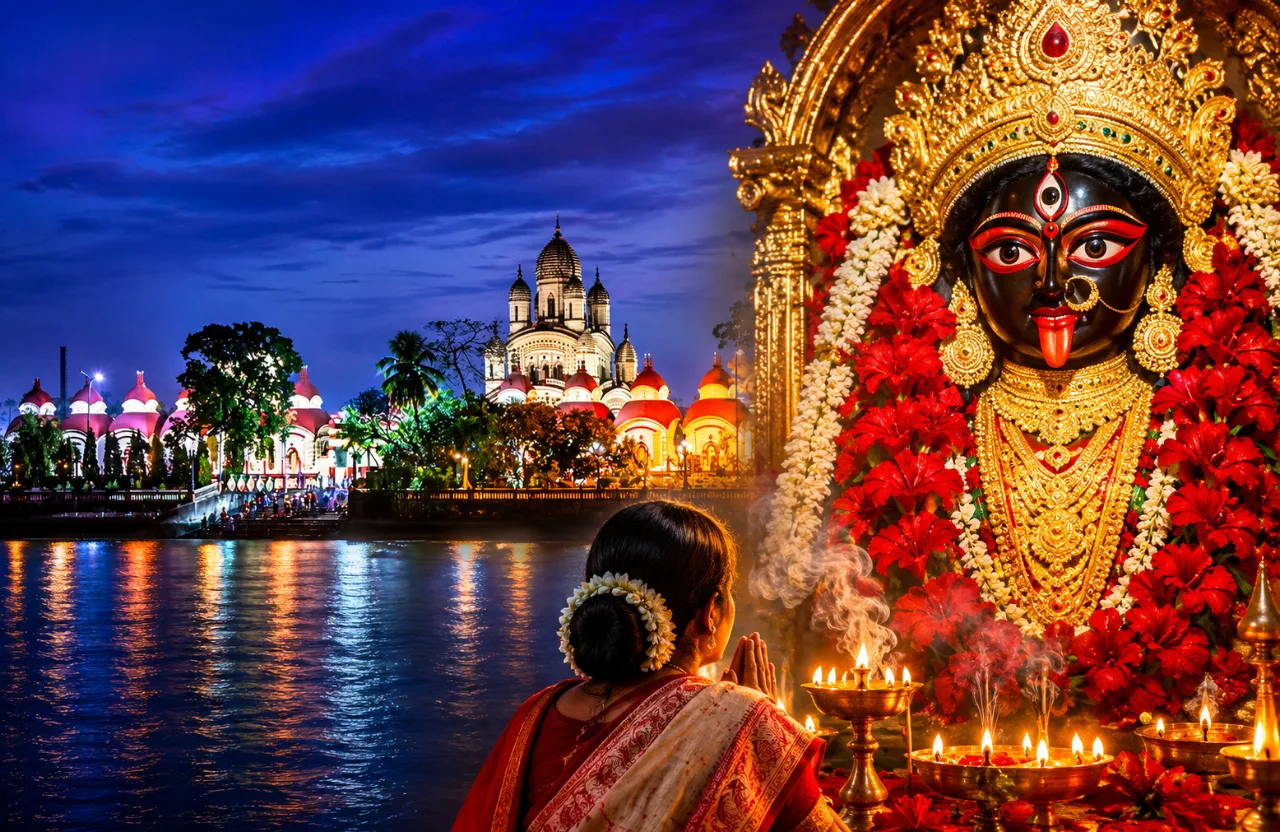









Durga Puja: How Tradition, Public Art, and Social Consciousness Reshape Bengal's Grand Festival
How the world's largest open-air art installation blends sacred ritual, socio-economic power, and contemporary consciousness.
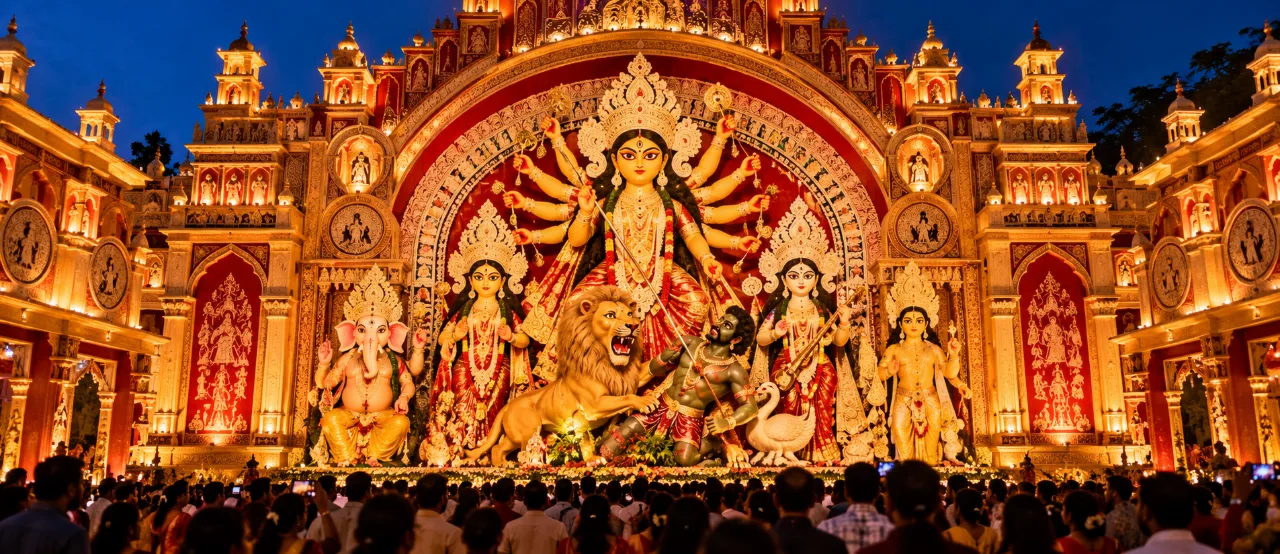
A Living Canvas of Heritage and Contemporary Expression
Each autumn, the onset of Sharodotsav transforms the state of West Bengal, particularly its capital Kolkata, into what global curators frequently celebrate as the world’s most extensive open-air art gallery. Far transcending the boundaries of religious observance, Durga Puja has evolved into a magnificent convergence of public architecture, indigenous craftsmanship, contemporary sociopolitical discourse, and community bonding.
In the wake of its recognition on UNESCO's Representative List of the Intangible Cultural Heritage of Humanity, recent celebrations have witnessed elevated national and international attention. Community clubs and traditional households (bonedi bari) have balanced age-old rituals with inventive installations that address real-world global challenges, from climate change and displacement to gender equality and mental health.
"Durga Puja is no longer solely an annual celebration of divinity; it has transformed into an unmatched democratic space where ordinary citizens interact directly with fine art, modern architecture, and shared cultural memory."
Thematic Innovation: Pandals as Societal Commentaries
Over the past decade, the tradition of 'theme pujas' has redefined the festival's aesthetic landscape. Leading contemporary artists, sculptors, and interior architects collaborate with master artisans to construct temporary sanctums (pandals) that narrate compelling stories.
- Socio-Cultural Reflection: Recent installations have tackled pressing humanitarian topics, honoring urban sanitation workers, celebrating traditional folk storytellers, and memorializing disappearing rural crafts.
- Material Authenticity: Organizers are increasingly turning to sustainable, organic materials such as terracotta, coir, dried leaves, bamboo, and recycled textiles, moving away from plaster-of-paris and synthetic polymers.
- Inclusivity Initiatives: Pandals now routinely feature universal design principles, integrating wheelchair-accessible ramps, braille festival guides, and dedicated viewing hours for senior citizens and neurodiverse individuals.
The Economic Dimension: Fueling the Creative Economy
Beyond its aesthetic and spiritual resonance, Durga Puja serves as an immense economic engine for Eastern India. The festival powers an extensive creative economy that supports millions of informal and specialized workers over a prolonged annual cycle.
Reviving Traditional Artisanship
In neighborhoods like Kumartuli in North Kolkata, multigenerational clay-modelling dynasties labor year-round to sculpt the iconic idols of Goddess Durga and her progeny. The economic ripple effect extends deep into rural districts: traditional dhakis (drummers) from Murshidabad and Bankura, lighting technicians from Chandannagar, and patachitra folk painters find substantial commercial sustenance during the festive quarter.
Retail and Hospitality Surge
The festival season represents the pinnacle of consumer retail, textile procurement, and hospitality turnover across the region. Local micro-entrepreneurs, street vendors, and established commercial enterprises alike report their highest quarterly revenues during this period, reinforcing the festival's stature as a cornerstone of state-level commercial vitality.
Sustainability and Green Practices Under the Spotlight
With civic authorities and civil society groups closely monitoring the environmental impact of large-scale celebrations, sustainability has emerged as a central pillar of recent festival governance. Environmental monitoring agencies and regional administrations have introduced stringent benchmarks regarding sound emission, waste disposal, and post-immersion river pollution.
- Eco-Friendly Immersions: The widespread adoption of artificial ponds, water-jet immersion tanks, and lead-free natural vegetable dyes has significantly reduced toxicity risks in the Hooghly River.
- Waste Segregation: Civic bodies have partnered with volunteer networks to manage post-festival debris, ensuring that millions of floral offerings and decorative elements are redirected toward organic compost and recycling systems.
- Energy Conservation: Low-power LED illumination and solar-augmented lighting frameworks have progressively replaced energy-intensive halogen arrays across major installations.
Looking Ahead: Sustaining an Unbroken Tradition
As Durga Puja moves deeper into the twenty-first century, its fundamental strength remains its capacity for reinvention without sacrificing its emotional and spiritual core. By embracing social dialogue, nurturing diverse creative professions, and holding fast to collective solidarity, the festival continues to stand as a global benchmark for public cultural celebration.
Official Editorial PDF Edition
Verified PublicationDownload a clean, high-resolution printable copy complete with tables, formulas, and high-res photography. Free for registered readers.
Community Feedback & Editorial Ratings
All Reader Reviews (0)
No reader reviews yet for this story.
Be the first to share your rating and perspective!