










4 photos available • Swipe or tap to view
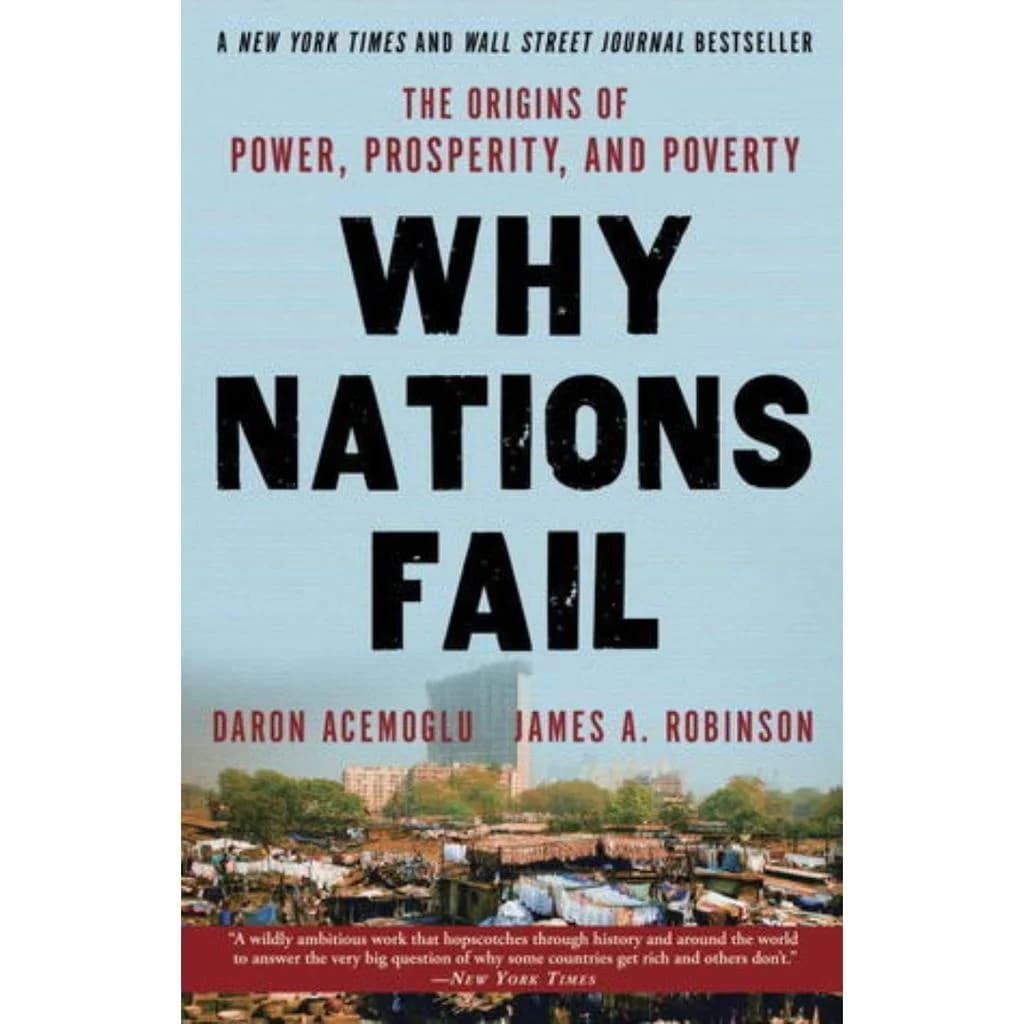
Why Nations Fail: The Origins of Power, Prosperity, and Poverty
Author: Daron Acemoglu & James A. Robinson
Publisher: Crown Business (2012)
Directly from official publisher (Crown Business) · Authentic print & binding · Zero piracy guarantee
About the Book
Why Nations Fail
The Origins of Power, Prosperity, and Poverty
Why are some countries wealthy while others remain poor? Why do certain societies create opportunities for economic growth, while others struggle with poverty, inequality, and political instability?
In Why Nations Fail, economists Daron Acemoglu and James A. Robinson explore the political and economic foundations of national prosperity.
The authors argue that a major reason for differences in prosperity lies in the nature of a country's institutions. They distinguish between inclusive institutions, which allow broad participation and create opportunities, and extractive institutions, which concentrate power and wealth in the hands of a few.
Using historical examples from different parts of the world, the book examines how political power, economic rules, property rights, and institutional development influence the long-term success or failure of nations.
What You Will Learn
Why some nations achieve long-term economic prosperity.
How political and economic institutions shape development.
The difference between inclusive and extractive institutions.
How concentrated political power can restrict economic opportunity.
Why property rights and political accountability matter.
How historical events influence modern economic development.
The relationship between democracy, institutions, and prosperity.
Why economic growth depends on more than natural resources or geography.
Why Should You Read This Book?
Understanding why countries develop differently is essential for understanding economics, politics, and society.
Why Nations Fail challenges popular explanations of poverty and prosperity and presents an institutional perspective on economic development. It encourages readers to examine how political systems and economic opportunities shape the future of societies.
Its central argument is influential and widely discussed, making the book valuable for readers who want to understand both economic development and debates about institutional change.
Who Should Read This Book?
Students preparing for UPSC, WBCS, and other competitive examinations.
Economics and political science students.
Civil service aspirants.
Researchers and academic professionals.
Business leaders and entrepreneurs.
Readers interested in governance and public policy.
Anyone curious about the causes of poverty and national prosperity.
About the Authors
Daron Acemoglu is an economist and professor at the Massachusetts Institute of Technology (MIT). His research focuses on political economy, institutions, economic development, and technological change.
James A. Robinson is an economist and political scientist whose work examines political institutions, economic development, and the historical foundations of prosperity.
Their research on institutions and economic development has had a major influence on modern political economy.
Book Details
Title: Why Nations Fail: The Origins of Power, Prosperity, and Poverty
Authors: Daron Acemoglu & James A. Robinson
Publisher: Crown Business
Publication Year: 2012
Language: English
Category: Economics, Political Science & Development
The prosperity of nations is shaped not only by what they have, but by how their societies are organized.
Related Publications




Reader Reviews & Ratings (0)
Real feedback and verified opinions from readers who purchased or read this title.
No reader reviews yet for this publication.
Why Nations Fail: The Origins of Power, Prosperity, and Poverty