









The Tyranny of Terrain: Reviewing Tim Marshall's 'Prisoners of Geography'
Mallika Jana Hatai
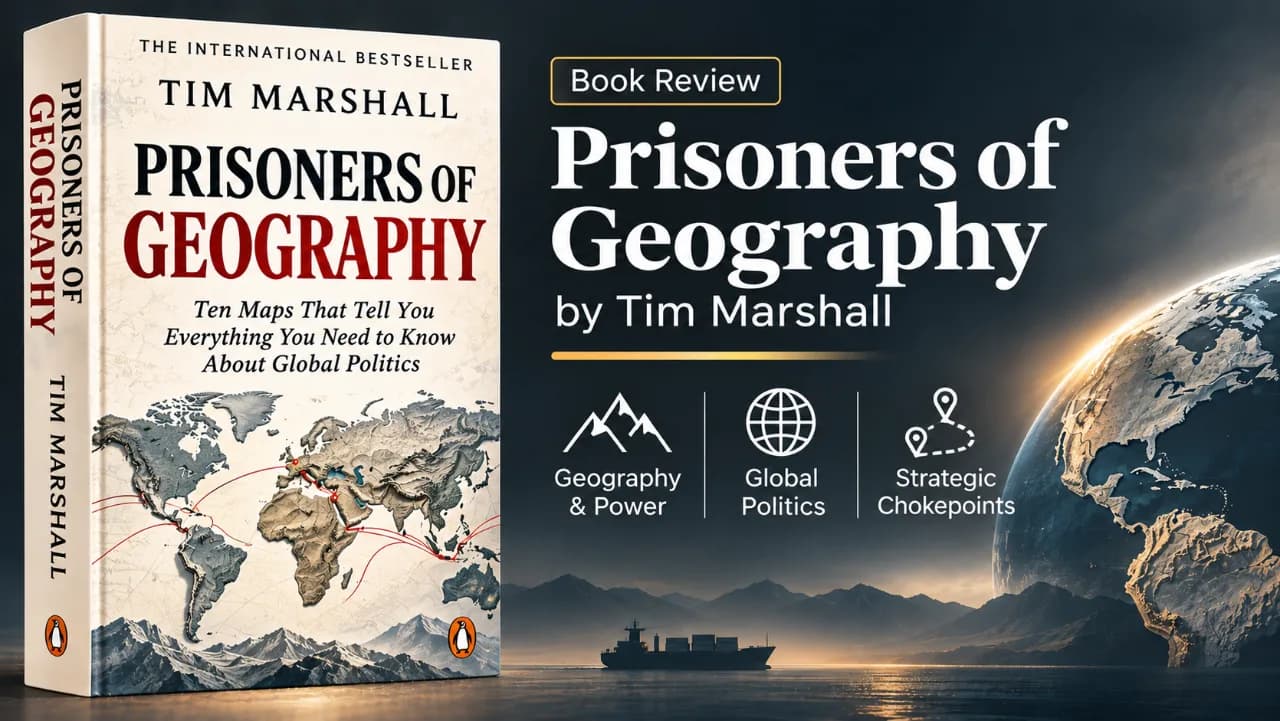
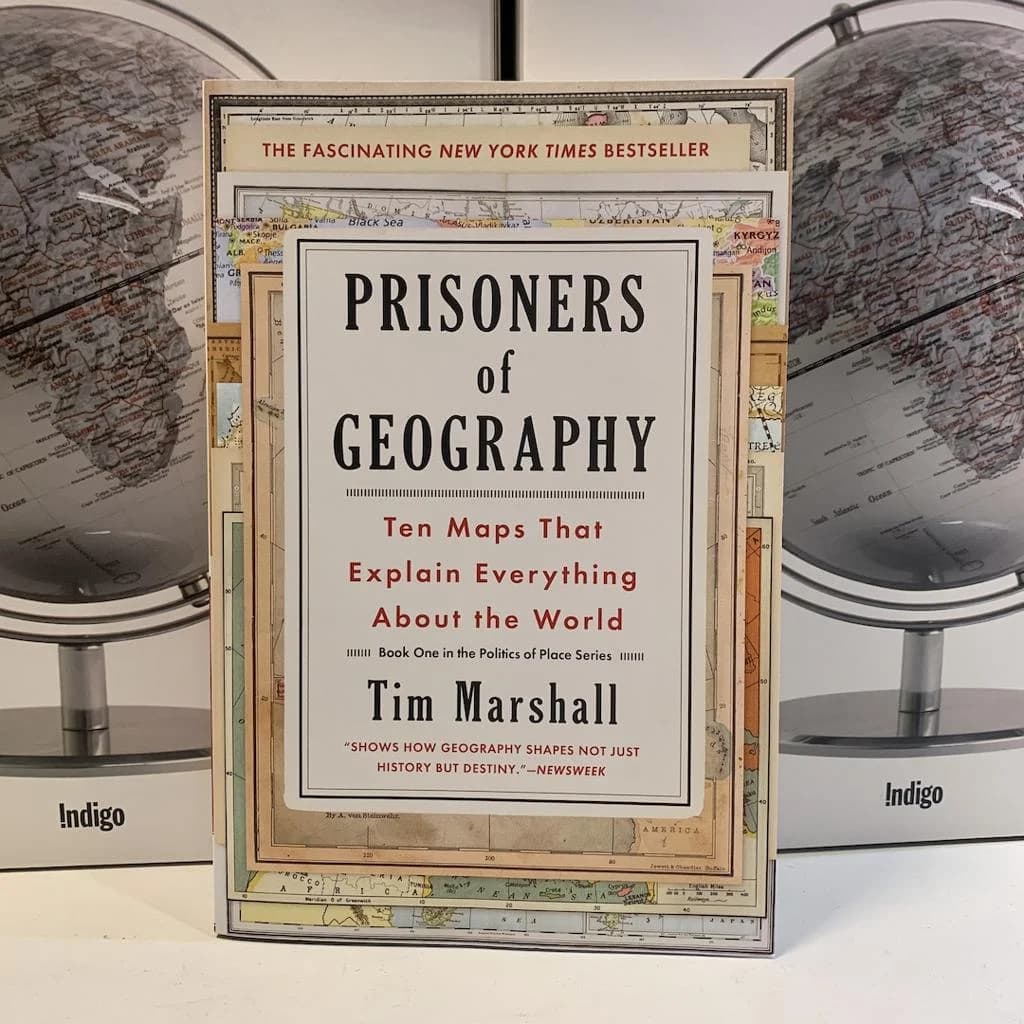
Prisoners of Geography: Ten Maps That Tell You Everything You Need to Know About Global Politics
Author: Tim Marshall
Publisher: Elliott & Thompson (2015)
Inclusive of all taxes
Narrative Vision & Central Thesis
In an era dominated by hyper-connected digital economies and ideological discourse, it is tempting to believe that human agency and technology have liberated modern statecraft from physical reality. In Prisoners of Geography: Ten Maps That Tell You Everything You Need to Know About Global Politics, veteran foreign correspondent Tim Marshall systematically dismantles this modern conceit. His core premise is as ancient as Thucydides yet continually overlooked: geography is an inescapable prison that dictates the strategic choices, existential fears, and expansionist ambitions of world leaders.
Organized neatly into ten geographic portraits—including Russia, China, the United States, Europe, Africa, and the Middle East—Marshall analyzes world history not as an arbitrary sequence of political decisions, but as the inevitable friction between human ambition and immovable topographies. Whether it is the vast, undefended North European Plain fueling Moscow’s perennial paranoia or the Tibetan plateau functioning as China’s indispensable water tower and defensive rampart, Marshall demonstrates that terrain consistently predates and outlasts ideology.
"Geography has always been a prison of sorts—one that defines what a nation can do, but more importantly, what it cannot."
Literary Style & Structural Precision
Marshall’s prose benefits enormously from his decades spent dodging artillery and reporting from conflict zones. His voice is conversational, authoritative, and direct, devoid of dense academic obfuscation without dumbing down intricate historical disputes. He writes with the momentum of an insightful briefing, deploying crisp declarative sentences that cut straight to the bone of geopolitical imperatives.
Each chapter follows a rhythmic cadence: establishing the topographic blueprint of a region, tracing historical traumas and expansions born from those physical boundaries, and projecting forward to contemporary crises. This structural clarity allows readers to effortlessly connect medieval invasions with twenty-first-century trade disputes, turning complex regional conflicts into intuitive geopolitical chess matches.
Key Strengths & Thematic Resonance
The book’s greatest triumph is its ability to induce an intellectual reset in the reader. Marshall forces us to examine familiar headlines through an unfamiliar, grounded perspective:
- The Russian Vulnerability: Marshall expertly articulates why Russia’s recurring westward aggression is anchored in the flat geography of Northern Europe, leaving Moscow with few natural barriers against foreign invasion.
- The American Blessing: The analysis of the United States highlights its extraordinary geographical lottery—flanked by two vast oceans, blessed with contiguous arable land, and bound together by the Mississippi river system.
- Arbitrary Borders and Post-Colonial Scars: The chapters on Africa and the Middle East stingingly critique European cartographers who carved up heterogeneous tribal lands with straight-line rulers, sowing generations of sectarian warfare.
"The rules of geography remain stubbornly unchanged: the mountains still stand, the rivers still flow, and the oceans still divide."
Critical Observations
While Prisoners of Geography excels as an introductory framework, its fierce geographic determinism occasionally verges on oversimplification. Marshall occasionally underplays how technological adaptation, soft power, and institutional strength can counteract harsh physical realities—cases like Singapore, Japan, and the Netherlands suggest that geography is not entirely destiny, but a difficult hand that can be played with ingenuity. Furthermore, the accompanying cartography in the paperback edition could have been rendered with greater topographic and tactical detail to better reflect Marshall's vivid prose descriptions.
Final Verdict & Who Should Read It
Despite minor deterministic overreach, Marshall's masterpiece remains one of the most accessible and persuasive foreign policy books of the past decade. It cuts through the fog of diplomatic posturing and ideological vanity to show why history keeps repeating itself along river valleys, straits, and mountain passes. For students of political science, journalists, history buffs, and anyone bewildered by international news, Prisoners of Geography is a vital compass for making sense of our fractured world.
Enjoyed this review? Order the physical copy today.
Secure your printed edition with fast doorstep courier delivery.
Related Books You May Also Like


Reader Reviews & Ratings (0)
Real feedback and verified opinions from readers who purchased or read this title.
No reader reviews yet for this publication.
Prisoners of Geography: Ten Maps That Tell You Everything You Need to Know About Global Politics