










The Architecture of Fear and Order: A Critical Reappraisal of Thomas Hobbes’s ‘Leviathan’
Mallika Jana Hatai
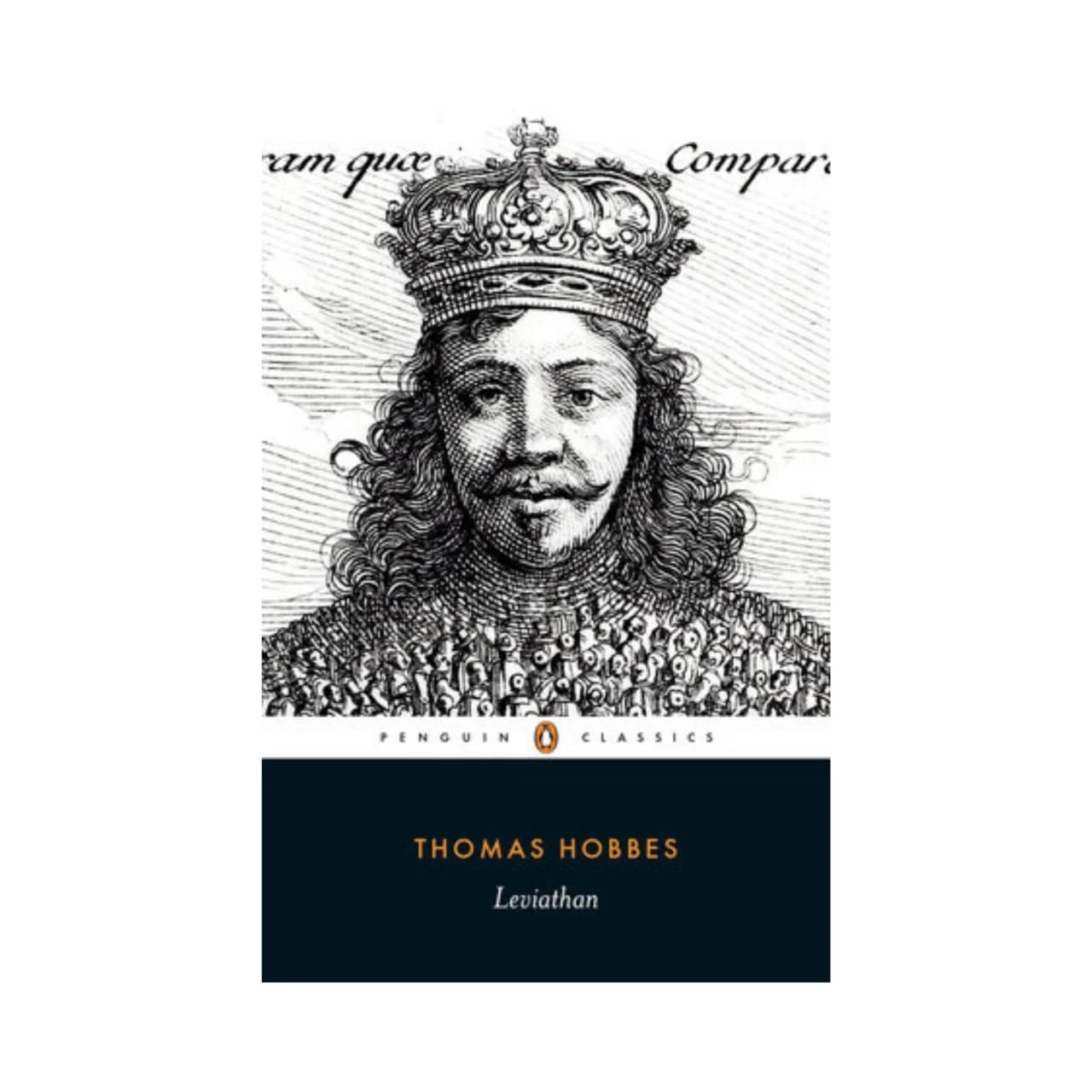
Leviathan
Author: Thomas Hobbes
Publisher: Penguin Classics
Inclusive of all taxes
The Crucible of Commonwealth: Narrative Vision & Central Thesis
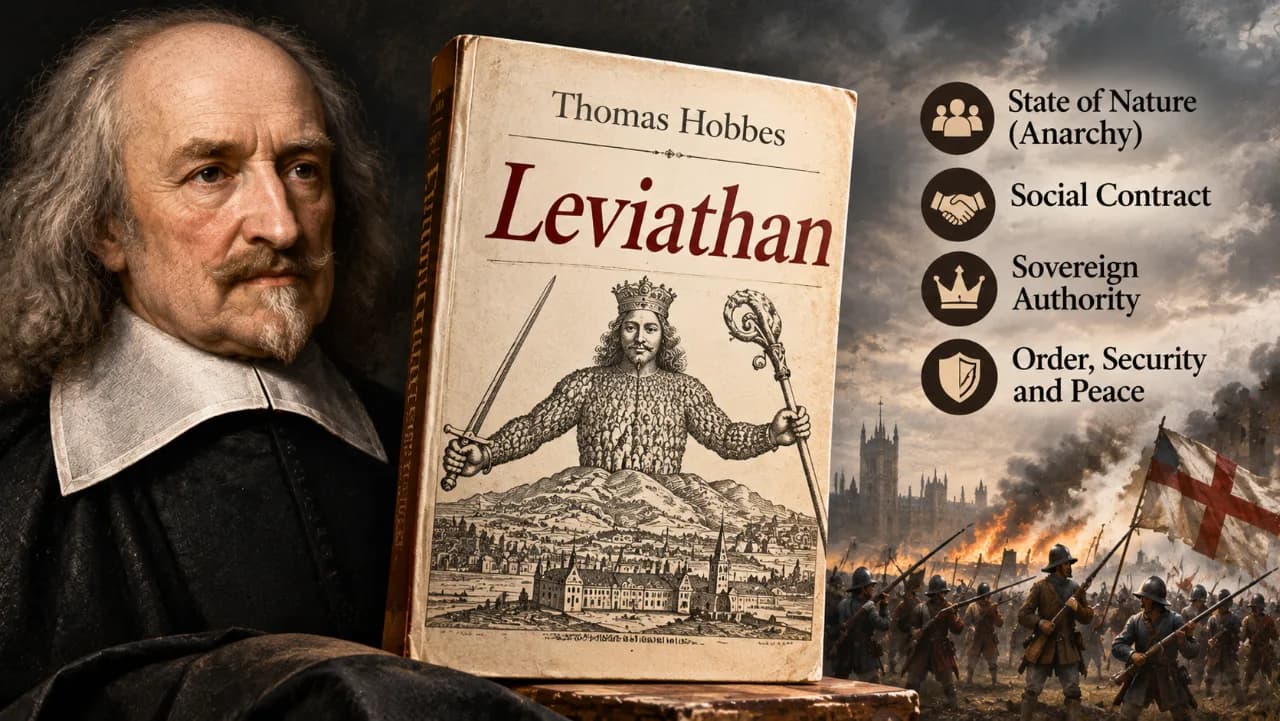
Few works in the Western canon evoke such immediate, visceral intellectual friction as Thomas Hobbes’s Leviathan. First published in 1651 on the smoldering heels of the English Civil War, Hobbes’s opus is not merely an ivory-tower disquisition on governance; it is an emergency manual for civil survival. Hobbes departs decisively from the scholastic traditions of Aristotle and the divine-right monarchists by stripping humanity down to its raw, mechanistic components. He envisions the human being not as an inherently political animal destined for communal harmony, but as a creature governed by motion, appetite, and above all, an overwhelming terror of violent death.
From this stark psychological terrain arises Hobbes’s infamous thought experiment: the state of nature. Left without a common coercive power, human life devolves into a theater of universal conflict—an unbearable reality where perpetual anxiety reign supreme. Hobbes does not offer this portrait as an anthropological history, but as an existential diagnostic. The creation of the sovereign, that 'Mortall God' to which we owe our peace and defense, is an act of calculated self-preservation. It is a contractual abdication: humanity willingly surrenders its unfettered natural liberties in exchange for the protective shelter of an undivided, sovereign state.
Rhetoric of Absolute Logic: Literary Style & Philosophical Prose
While frequently treated strictly as a work of political theory, Leviathan deserves profound recognition as a triumph of seventeenth-century English rhetoric. Hobbes writes with an austere, geometrical cadence modeled on Euclidean geometry. Every definition is chiseled with surgical precision, designed to lay an unassailable premise before advancing toward audacious conclusions.
Yet beneath this mathematical detachment lies an extraordinary flair for poetic metaphor. Hobbes does not merely argue; he paints haunting allegorical landscapes. The Commonwealth itself is animated as a gargantuan artificial man, its joints composed of magistrates and its nerves spun from rewards and punishments. His prose balances Latinate formality with an incisive vernacular punchiness that remains remarkably vibrant today. Passages that delineate the miserable fate of man unanchored by law resonate with rhythmic, almost biblical finality:
“In such condition, there is no place for industry... no arts; no letters; no society; and which is worst of all, continual fear, and danger of violent death; and the life of man, solitary, poor, nasty, brutish, and short.”
Thematic Resonance: The Fragility of Civil Peace
What gives Leviathan its perennial vitality is Hobbes’s refusal to indulge in utopian sentimentality. He is the ultimate realist, acknowledging that moral virtues mean little when hunger, pride, and religious fanaticism dismantle institutional guardrails. The central themes explored throughout the text carry undeniable weight for our contemporary landscape:
- The Primacy of Security: Hobbes boldly asserts that justice, property, and freedom cannot exist prior to security. Rights are meaningless abstractions without an executive arm strong enough to enforce contracts.
- The Anatomy of Pride and Discord: Rather than viewing conflict as an anomaly, Hobbes diagnoses pride (vainglory) and ideological fervor as permanent features of the human condition that require constant institutional containment.
- The Subordination of Dogma to Stability: In Parts III and IV, Hobbes engages in a daring theological critique, explicitly subordinating ecclesiastical authority to the secular sovereign to neutralize sectarian warfare.
Critical Observations: The Tyranny of the Unchecked Arbiter
For all its structural coherence, Leviathan provokes legitimate and enduring discomfort. Hobbes’s unyielding insistence on an indivisible, absolute sovereign reveals a profound and arguably fatal blind spot: his refusal to contemplate institutional mechanisms against sovereign tyranny itself. In his terror of anarchy, Hobbes trades the danger of popular discord for the danger of unchecked despotic predation.
Furthermore, his mechanistic view of human consciousness reduces all communal impulse to transactional fear and utility. By dismissing civil society’s capacity for spontaneous self-organization and pluralism, Hobbes crafts an authoritarian bargain that modern readers, seasoned by the horrors of twentieth-century totalitarianism, must inherently interrogate. His political geometry is brilliant, but it is built upon the premise that humanity's only alternative to servitude is annihilation.
Final Verdict & Who Should Read It
This Penguin Classics volume, equipped with robust scholarly apparatus and textual annotations, restores the uncompromising clarity of Hobbes’s vision. Leviathan is essential reading not because one must agree with its autocratic conclusions, but because it challenges every comfort modern constitutionalism takes for granted. It is an indispensable touchstone for students of political science, philosophers, historians, and any citizen seeking to comprehend the hidden costs, delicate fragility, and coercive architecture underpinning the modern state.
Enjoyed this review? Order the physical copy today.
Secure your printed edition with fast doorstep courier delivery.
Related Books You May Also Like
Reader Reviews & Ratings (0)
Real feedback and verified opinions from readers who purchased or read this title.
No reader reviews yet for this publication.
Leviathan