










The Architecture of Belonging: Reviewing Benedict Anderson's 'Imagined Communities'
Mallika Jana Hatai
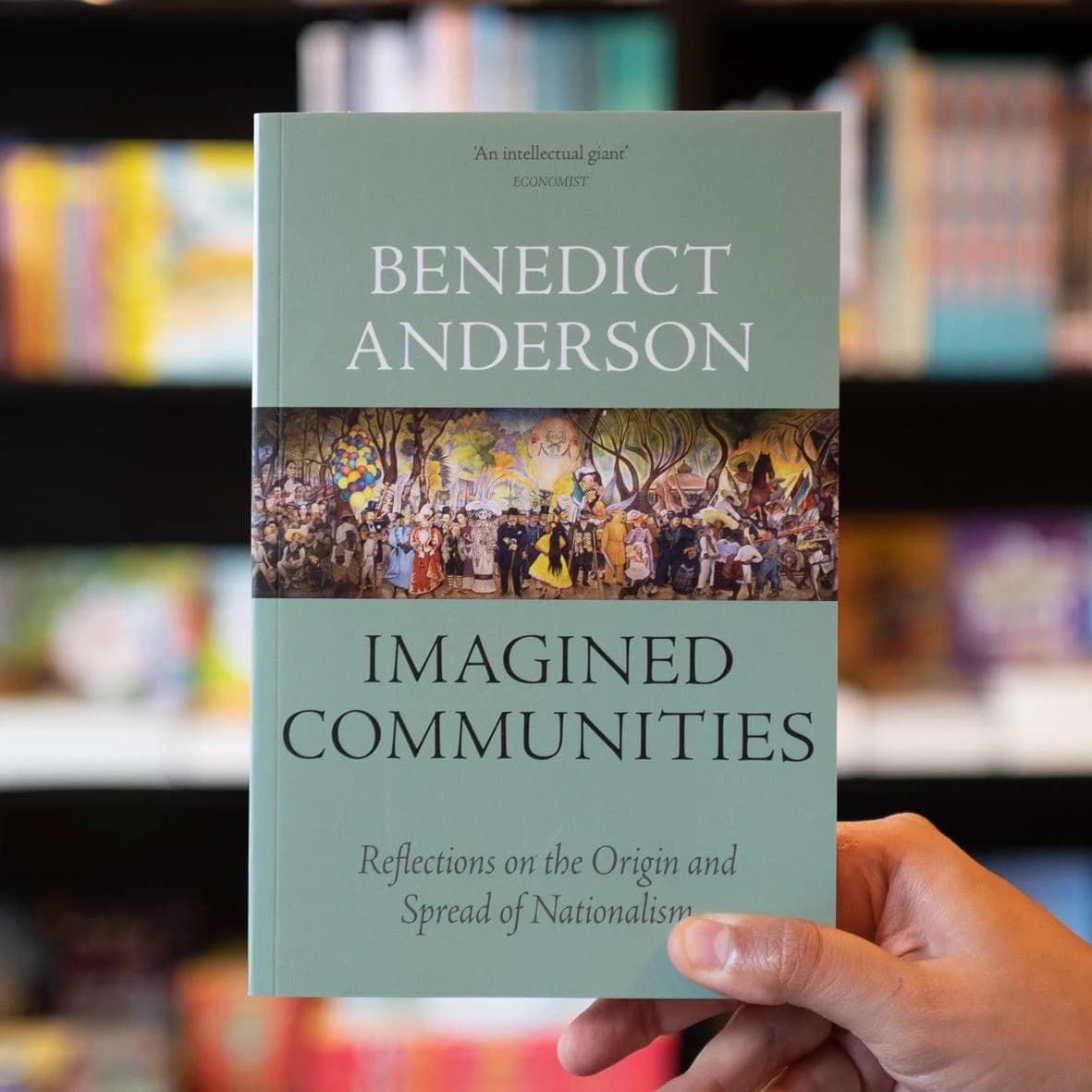
Imagined Communities: Reflections on the Origin and Spread of Nationalism
Author: Benedict Anderson
Publisher: Verso (1983)
Inclusive of all taxes
Narrative Vision & Central Thesis
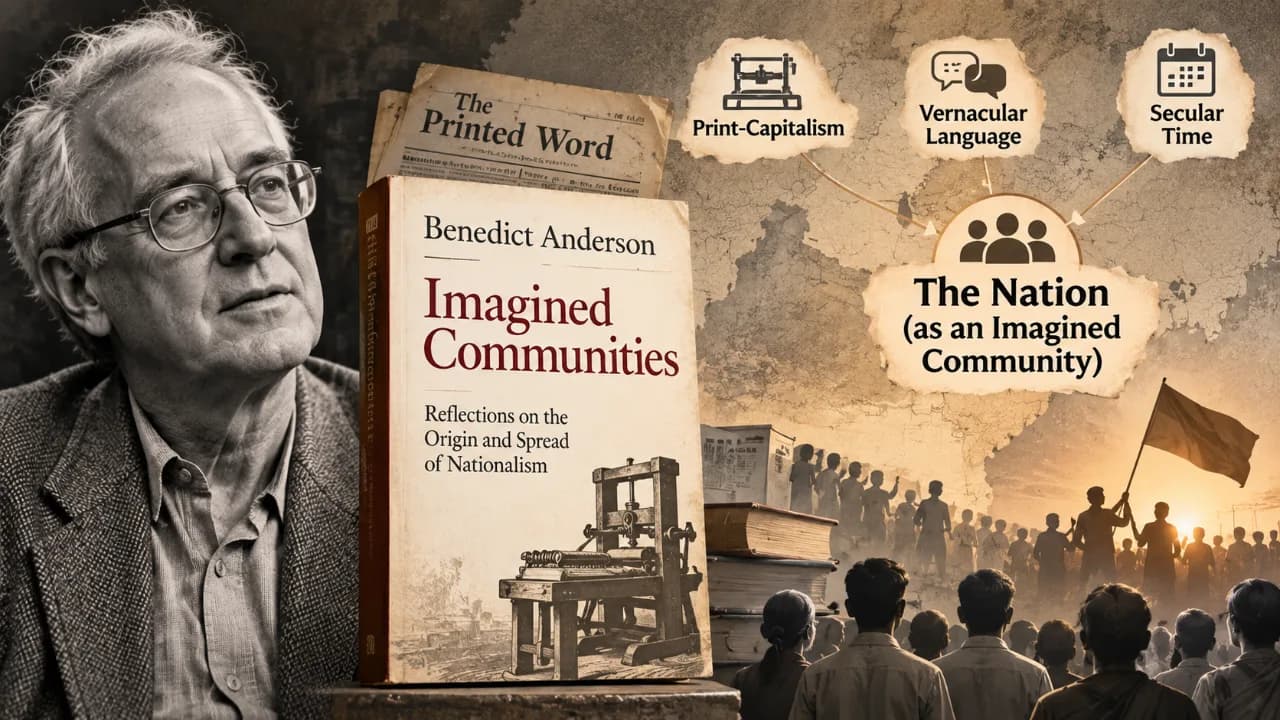
Few academic inquiries have radically reshaped the contours of political theory quite like Benedict Anderson’s 1983 masterpiece, Imagined Communities: Reflections on the Origin and Spread of Nationalism. Writing against the prevailing orthodoxies of both classical Marxism and Western liberal historiography—which frequently treated nationalism as either false consciousness or an ancient, primordial impulse—Anderson proposed a deceptively elegant alternative: nations are cultural artifacts of a particular historical convergence.
Central to Anderson’s architecture is his luminous formulation that the nation is 'an imagined political community—and imagined as both inherently limited and sovereign.' It is imagined because members will never meet the vast majority of their compatriots, limited because bounded frontiers define its periphery, and sovereign because it emerged alongside the secular dismantling of divine dynastic hierarchies.
"It is imagined because the members of even the smallest nation will never know most of their fellow-members, meet them, or even hear of them, yet in the mind of each lives the image of their communion."
The Mechanics of Print-Capitalism and Time
Where Anderson’s thesis soars beyond conventional sociopolitical tracts is in its fascinating diagnostic of everyday cultural mechanics. Anderson identifies the explosive rise of print-capitalism in early modern Europe as the engine that forged national consciousness. With the decline of sacred Latin and the commercial imperative to sell mass-market texts, printers seized upon vernacular languages, standardizing dialects and forging widespread linguistic empathy.
Moreover, Anderson borrows Walter Benjamin’s philosophical concept of 'homogeneous, empty time.' Through the synchronous morning ritual of reading daily newspapers or consuming popular novels, millions of individual citizens began to experience the psychological sensation of moving forward through time simultaneously. The act of turning pages transformed solitary readers into anonymous comrades bound to a shared, unfolding chronicle.
Global Scope and Intellectual Vitality
Rather than adopting a typical Eurocentric trajectory, Anderson’s comparative historical scope is refreshingly cosmopolitan, rooted deeply in his expertise in Southeast Asian politics and history. He provocatively locates the earliest incubators of modern nationalist identity not in revolutionary France, but among the 'Creole pioneers' of Latin America and the United States, who recognized their shared geopolitical exclusion under colonial metropolitan administration.
The Enduring Power of Anderson’s Analysis:
- Decentering Europe: Highlights the administrative and emotional pathways that birthed patriotic fervour across the Americas before spreading globally.
- The Triad of Legibility: Later editions brilliantly deconstruct the census, the map, and the museum as totalizing instruments through which colonial powers shaped subject identities.
- Deep Emotional Resonance: Takes seriously why people are moved to love, write poetry for, and lay down their lives for an abstract communal construct.
Critical Observations & Contemporary Relevance
While Imagined Communities remains indisputably brilliant, it is not without theoretical blind spots. Feminist theorists have correctly pointed out Anderson's comparative neglect of how gendered hierarchies structure national membership, while subaltern scholars have noted an occasional underestimation of coercive state violence in favour of romantic fraternity. Yet in our digital era—where social media feeds, algorithmic echo chambers, and sovereign internet fragmentation replace the morning newspaper—Anderson’s core questions resonate with uncanny urgency.
Final Verdict & Who Should Read It
Gracefully written, deeply humane, and conceptually incandescent, Anderson’s prose exhibits a literary vitality rarely encountered in political philosophy. Imagined Communities is indispensable reading for historians, sociologists, political thinkers, and any curious reader seeking to understand the enduring emotional, psychological, and institutional scaffolding of the modern world.
Enjoyed this review? Order the physical copy today.
Secure your printed edition with fast doorstep courier delivery.
Related Books You May Also Like


Reader Reviews & Ratings (0)
Real feedback and verified opinions from readers who purchased or read this title.
No reader reviews yet for this publication.
Imagined Communities: Reflections on the Origin and Spread of Nationalism