









Architects of Our Own Obsolescence: A Critical Review of Yuval Noah Harari's 'Homo Deus'
Mallika Jana Hatai
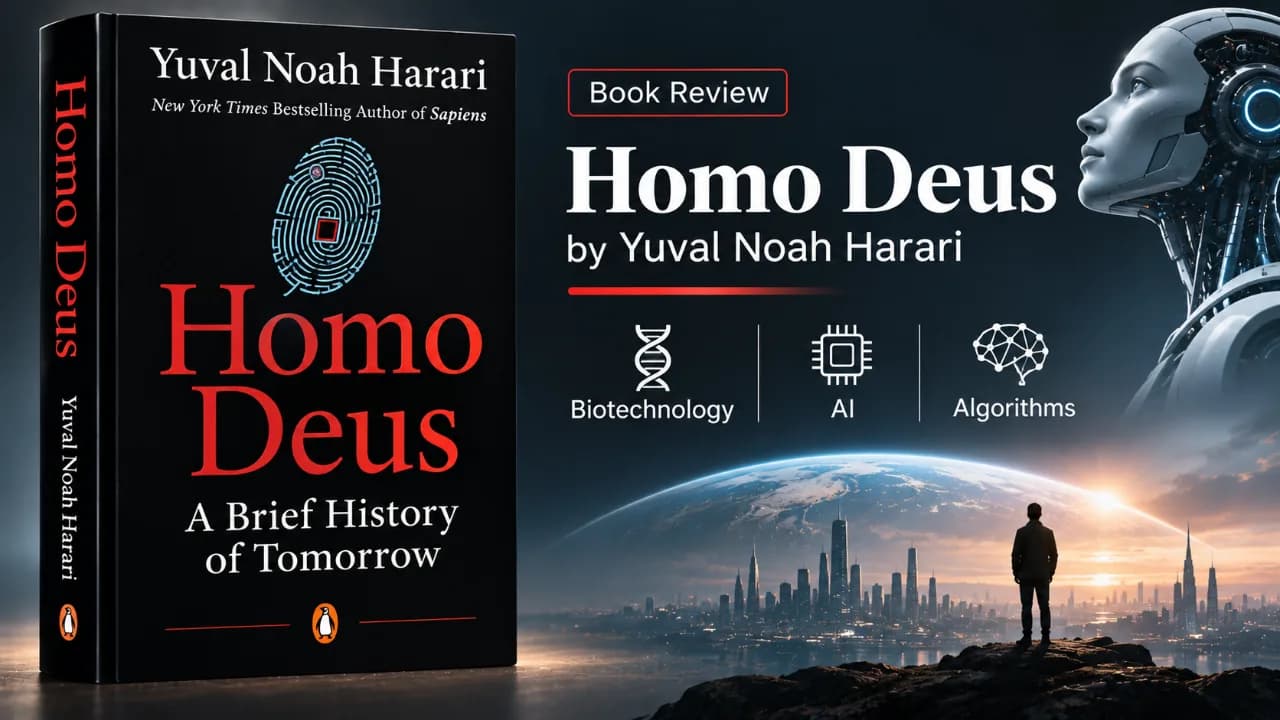
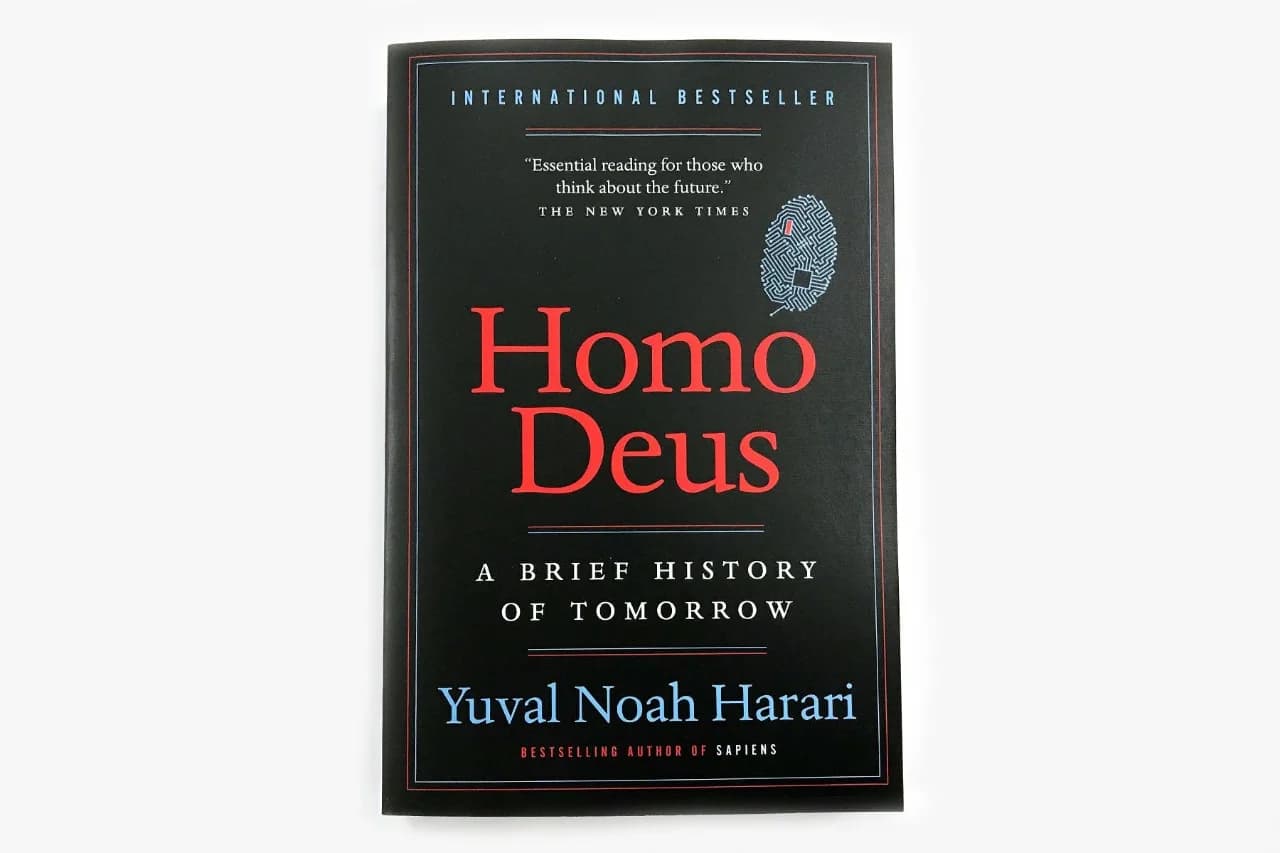
Homo Deus: A Brief History of Tomorrow
Author: Yuval Noah Harari
Publisher: Harvill Secker (2016)
Inclusive of all taxes
Narrative Vision & The Central Thesis
Following the monumental triumph of Sapiens: A Brief History of Humankind, Israeli historian Yuval Noah Harari undertook a far more speculative and perilous intellectual enterprise: projecting the trajectory of the human animal into the centuries ahead. In Homo Deus: A Brief History of Tomorrow, Harari posits that having subdued—or at least functionally managed—humanity's historic trinity of existential scourges (famine, plague, and war), modern civilization is quietly pivoting toward entirely new ambitions: immortality, boundless happiness, and divine mastery.
Harari’s central thesis is that the very philosophies that elevated human dignity over the past two centuries—chiefly humanism, liberalism, and free-market capitalism—are predicated on assumptions about free will and individualism that modern science is actively dismantling. As algorithms surpass biological entities in intelligence, efficiency, and predictive power, Harari envisions a world governed not by anthropocentric ethics, but by a nascent philosophy he terms 'Dataism', where data flow is venerated as the supreme universal good.
Literary Style, Prose, and Narrative Momentum
Harari possesses an extraordinary gift for macro-historical synthesis, translating labyrinthine concepts from cognitive neuroscience, cybernetics, evolutionary biology, and theology into lucid, electrifying prose. His narrative voice is calmly professorial yet punctuated with dry irony and apocalyptic cadence. Rather than drowning readers in technical jargon, he employs vivid analogies, comparing modern biometric tracking to traditional priestly authority, and artificial neural networks to the bureaucratic apparatuses of imperial empires.
"In the past, censorship worked by blocking the flow of information. In the twenty-first century, censorship works by flooding people with irrelevant information."
The pacing of Homo Deus is deliberate and architectonic. Harari dedicates the first third of the treatise to deconstructing the foundations laid down in Sapiens, ensuring the reader understands how intersubjective myths—money, nations, human rights—have historically organized mass societies. From there, the narrative accelerates into an unnerving examination of contemporary technology, ultimately culminating in an eerie meditation on the twilight of human agency.
Key Strengths & Thematic Resonance
The greatest strength of Homo Deus lies in Harari’s refusal to indulge in naive techno-utopianism or simple dystopian alarmism. Instead, he systematically interrogates the philosophical underpinnings of our modern identity:
- The Decoupling of Intelligence and Consciousness: Harari crystallizes one of the most pressing dilemmas of the AI era—namely, that high-level intelligence has become untethered from subjective consciousness, making human labor and insight increasingly expendable.
- The Fracture of Equality: Unlike the mass-mobilization eras of the twentieth century, which compelled elites to invest in the education and health of the proletariat, the biological upgrades of tomorrow could establish insurmountable caste divides based on genetic enhancement and cognitive augmentation.
- The Rise of Dataism: Harari provides a trenchant critique of Silicon Valley's implicit theology, arguing that the reduction of human experiences to data processing algorithms fundamentally imperils the sacredness of human emotion and intent.
Critical Observations & Vulnerabilities
Despite its brilliance, Homo Deus is not without flaws. At times, Harari’s sweeping generalizations border on deterministic fatalism. He occasionally treats speculative neurobiological theories—such as the total illusory nature of consciousness and free will—as settled scientific dogma rather than contentious philosophical frontiers. Furthermore, his early-chapters assertion that humanity has effectively conquered global pandemics and large-scale warfare reads with a tragic sense of irony in a post-2020 landscape marked by COVID-19 and escalating geopolitical conflagrations.
Additionally, while Harari poses devastating questions regarding the ethical vacuum created by algorithmic supremacy, he rarely offers programmatic solutions or alternative paradigms, leaving the reader with a sense of cerebral vertigo rather than actionable resolve.
Final Verdict & Who Should Read It
Despite these minor conceptual overreaches, Homo Deus remains a cornerstone text of twenty-first-century intellectual thought. It is essential reading for technologists, policymakers, philosophers, and anyone seeking to understand the titanic cultural and existential shifts brewing beneath the surface of the digital revolution. Harari does not pretend to prophesy the exact future; instead, he masterfully clears the cognitive fog of the present so that we may see the looming precipice before us.
Enjoyed this review? Order the physical copy today.
Secure your printed edition with fast doorstep courier delivery.
Related Books You May Also Like

Reader Reviews & Ratings (0)
Real feedback and verified opinions from readers who purchased or read this title.
No reader reviews yet for this publication.
Homo Deus: A Brief History of Tomorrow