









A Symphony of Stardust: Reviewing Carl Sagan's Masterpiece 'Cosmos'
Mallika Jana Hatai
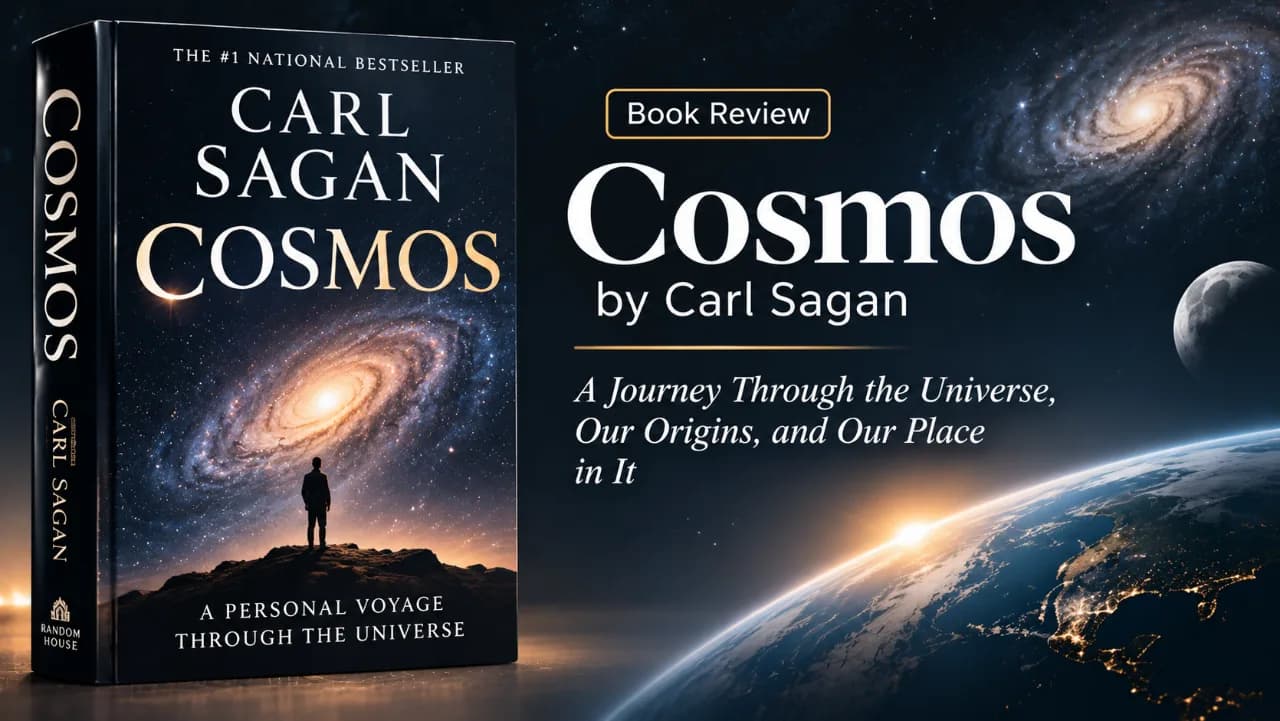
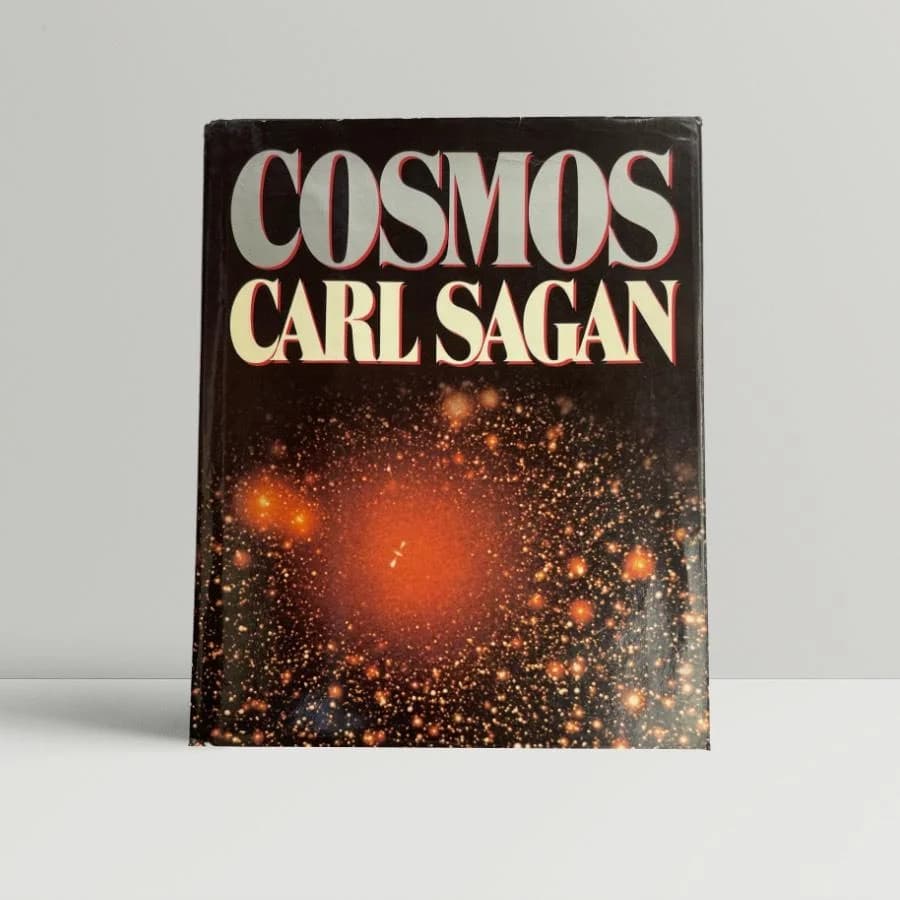
Cosmos
Author: Carl Sagan
Publisher: Random House (1980)
Inclusive of all taxes
Narrative Vision & Central Thesis
Published in 1980 alongside the landmark PBS documentary series, Carl Sagan's Cosmos stands not merely as a masterclass in science exposition, but as an enduring secular hymn to the universe. Sagan's central thesis is as disarming as it is profound: that human consciousness represents the cosmos reflecting upon itself. Rather than presenting science as an austere pantheon of sterile formulas, Sagan conceptualizes discovery as an intrinsic biological and philosophical journey woven into the fabric of human survival.
"The cosmos is within us. We are made of star-stuff. We are a way for the cosmos to know itself."
Traversing fifteen billion years of cosmic evolution, Sagan charts a trajectory from the violent dawn of stellar nucleosynthesis to the precarious precipice of modern civilization. In doing so, he dismantles the false dichotomy between the humanities and hard sciences, arguing that our technical brilliance must be matched by equal measures of self-awareness and compassionate foresight.
Literary Style & The Poetry of Empirical Wonder
Where many scientific treatises falter under the gravity of technical pedantry, Sagan's prose ascends into genuine literary brilliance. His style is distinguished by rhythmic cadence, evocative metaphors, and an unwavering moral clarity. When describing the vast expanse of deep time, he introduces the now-famous Cosmic Calendar, compressing the entire history of the universe into a single calendar year—a conceptual device that remains unmatched in its ability to instill both humility and awe.
Sagan excels equally at historical dramatization. His vignettes of pivotal figures—from the intellectual courage of Hypatia of Alexandria to the tragic genius of Johannes Kepler and the stubborn brilliance of Jean-François Champollion—read like high-stakes dramatic narratives. Through these human-scale portraits, Sagan demonstrates that the march of scientific progress is not an inevitable mechanization, but a fragile torch passed through generations across dark eras of dogma and ideological suppression.
Key Strengths & Thematic Resonance
The enduring vitality of Cosmos stems from three distinct thematic pillars:
- Epistemological Humility: Sagan champions the scientific method as an instrument of skepticism paired with boundless wonder, cautioning readers against both dogmatic certainty and superstitious credulity.
- The Synthesis of Knowledge: The book fluidly integrates biology, planetary astronomy, anthropology, history, and mythology, demonstrating that planetary health is inextricably tied to our understanding of stellar phenomena like the runaway greenhouse effect on Venus.
- Planetary Stewardship: Written in the twilight of the Cold War, Sagan's warnings regarding nuclear self-annihilation and ecological neglect resonate with terrifying prescience today in the face of anthropogenic climate destabilization.
Critical Observations: A Product of Its Geopolitical Horizon
From a contemporary standpoint, minor details of astronomical observation have naturally evolved since 1980; the discovery of thousands of exoplanets, the direct detection of gravitational waves, and refined estimates of cosmic expansion postdate Sagan's writing. Furthermore, Sagan's historical surveys occasionally adopt an idealized Enlightenment narrative, slightly smoothing over the nuanced geopolitical complexities that accompanied historical scientific transitions. Yet these historical parameters never diminish the book's core impact; rather, they ground it as an earnest dispatch from a pivotal twentieth-century moment when humanity first acquired both the ability to leave its planet and the capacity to incinerate it.
Final Verdict & Who Should Read It
Cosmos is far more than an introduction to astronomy; it is an ethical manifesto for the modern species. Carl Sagan achieved something exceedingly rare in twentieth-century non-fiction: he rendered the cosmos intimate without diminishing its staggering majesty. It remains mandatory reading for futurists, scientific novices, seasoned scholars, and anyone seeking philosophical refuge beneath a starry night sky.
Enjoyed this review? Order the physical copy today.
Secure your printed edition with fast doorstep courier delivery.
Related Books You May Also Like




Reader Reviews & Ratings (0)
Real feedback and verified opinions from readers who purchased or read this title.
No reader reviews yet for this publication.
Cosmos